Why Your Running Jacket Needs a Different Fit Once You Add a Base Layer
Quick Answer: A running jacket needs about two inches of ease over whatever is underneath. Sized for a single tee, it becomes restrictive over a base layer; sized for a base layer, it flaps when worn alone. If you run in both configurations, fit the jacket to the layered version and use the drawcords to manage the solo runs.
The jacket was perfect in September over a tee.
It is late October, you have added a base layer underneath, and now the shoulders bind on the arm swing while the hem rides up every mile.
Same jacket, same body, and it has become a different garment.
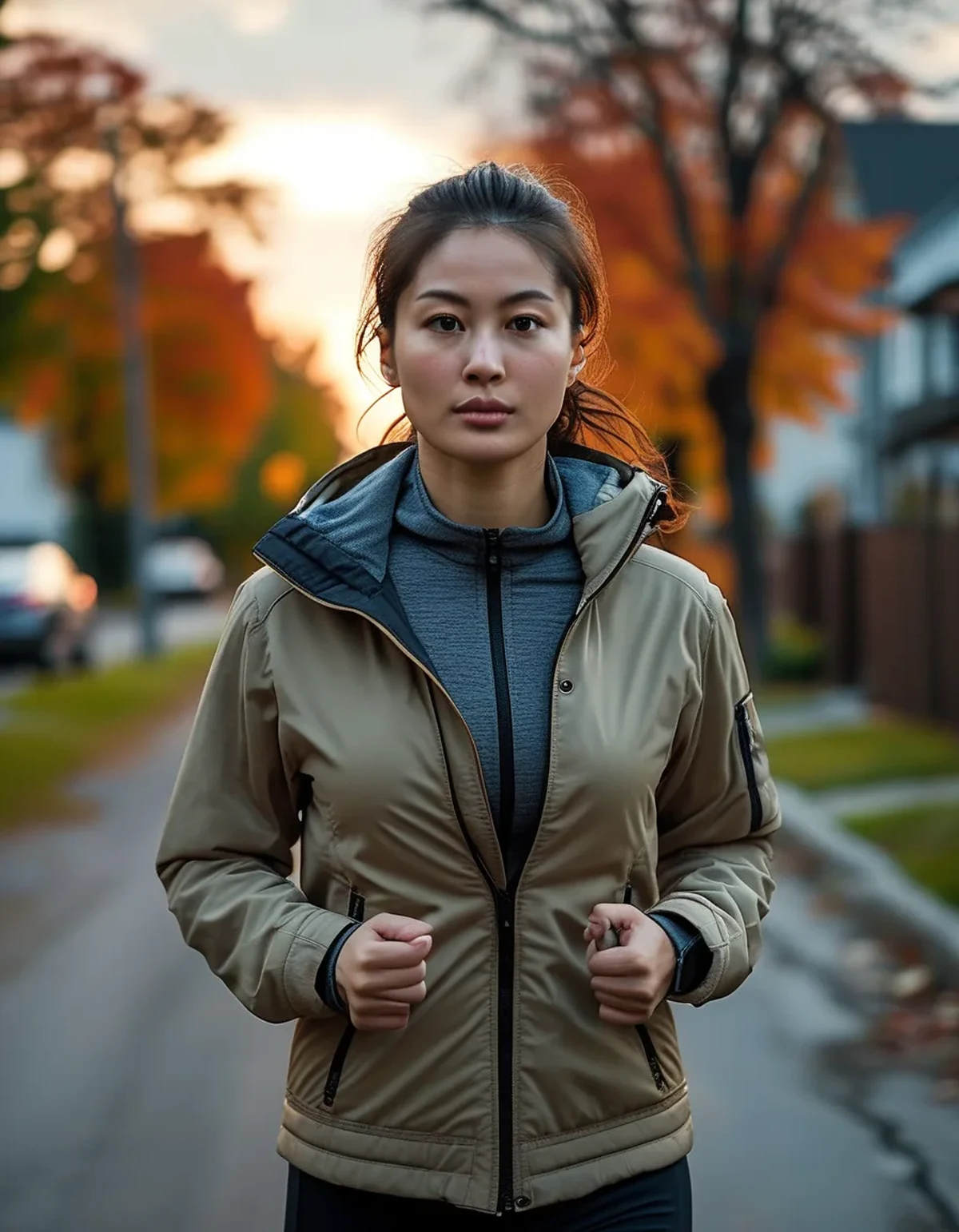
What actually goes wrong when you layer under a running jacket?
Running jackets are cut close for a reason. Excess fabric flaps at speed, catches wind, and turns a light shell into something noisy and inefficient. Manufacturers cut them assuming one thin layer underneath.
Add a base layer and you consume that allowance. The first thing to go is the shoulder, because arm swing needs more room across the upper back than standing still does — a jacket that feels fine in the mirror can bind noticeably at mile one.
The second thing is the hem. A jacket pulled tight across the torso rides up as you run, and once the hem sits above your waistband, cold air enters at the exact point you have been trying to keep warm.
The third is ventilation. A close-fitting jacket over a base layer loses the air gap that lets moisture move outward, which is why people report the same jacket being breathable in September and clammy in November.
How much room should a running jacket actually have?
Roughly two inches of ease at the chest over whatever you will be wearing, and enough length that the hem sits below your waistband when you are leaning slightly forward.
Test it properly rather than in a mirror. Put on the base layer and jacket, then do fifteen seconds of exaggerated arm swings and ten leg swings. If the shoulders pull, the sleeves ride, or the hem lifts above your waistband, the fit is wrong for that configuration.
Sleeve length matters more than people expect. Run with your elbows bent at 90 degrees, which is where they live, and check that the cuff still covers your wrist. A sleeve that is correct with arms down is short by an inch and a half in running position.
And check the zip at the neck. A jacket that fits the body but pinches at the throat over a base layer collar will be unzipped within a mile, which defeats most of the point.

Myth vs Fact: Running Jacket Layering
Myth: Buy the jacket a size up so it fits over anything. Fact: An oversized shell flaps, traps cold air rather than warm, and performs worse in wind than a correctly fitted one. Size for the layered configuration specifically, not for maximum flexibility.
Myth: A thicker jacket removes the need for a base layer. Fact: The base layer’s job is moisture transport, not warmth. A thick jacket over bare skin is warmer at the start and considerably colder once you are damp.
Myth: Waterproof is always better than water-resistant. Fact: For running, breathability usually matters more. A fully waterproof shell in anything but heavy rain leaves you wet from the inside, which feels identical and lasts longer.
Myth: The drawcord at the hem solves a loose fit. Fact: It cinches the hem and does nothing for the chest or shoulders, which is where flapping actually originates. Drawcords are for fine adjustment, not for correcting a size.
What is the layering system that actually works?
Three pieces, and only one of them changes with the weather.
Next to skin: a fitted long-sleeve in merino or a synthetic blend. Fitted is not optional here — a loose base layer cannot move moisture off your skin because it is not touching it. This layer stays the same from October to March.
Middle, only below about 4C: a thin half-zip or a light grid fleece. Most runners overuse this layer. If you are comfortable standing outside before the run, you are overdressed for minute fifteen.
Outer: the shell, chosen for wind resistance first and water resistance second. Wind is what actually makes you cold at running speed; a 15 kph headwind at 8C removes heat faster than still air at 2C.
The rule that keeps this simple: dress for 10 degrees warmer than the thermometer says. You should be slightly uncomfortable at the door. If you are comfortable at the door, you will be too warm by the first mile and damp for the rest of the run.
FAQ: Running Jacket Questions, Answered
Can I use the same jacket all winter?
Usually yes, if you fit it for the layered configuration and accept slightly more flap on warmer solo runs. A second lighter shell is a luxury rather than a necessity for most people.
Should the jacket have pockets?
One zip pocket at the back or side is enough. Front hand pockets on a running jacket add bulk exactly where arm swing happens and tend to bounce when loaded.
How do I stop the jacket smelling after a few weeks?
Wash it more often than the label implies, using a technical detergent rather than regular liquid. Fabric softener coats the fibers and destroys both breathability and water resistance, and it is the single most common cause of a jacket that stops performing.
TL;DR:
- Add a base layer and you consume the jacket’s built-in ease, which causes shoulder bind, hem ride-up, and lost breathability.
- Fit for the layered version: about two inches of ease, hem below the waistband, cuffs long enough for bent elbows.
- Test with arm and leg swings rather than in a mirror.
- Three layers, only the middle one seasonal, and dress for 10 degrees warmer than it is.
The jacket did not shrink and you did not change. You added a quarter-inch of fabric to every surface it was measured against, and a garment cut with two inches of ease has no room to absorb that. Fit it for November and September takes care of itself.
Keep Reading
This article is for general informational and styling purposes only. Fit, sizing, and product availability may vary.