Why the Layer Under Your Running Jacket Decides More About Warmth Than the Jacket Does
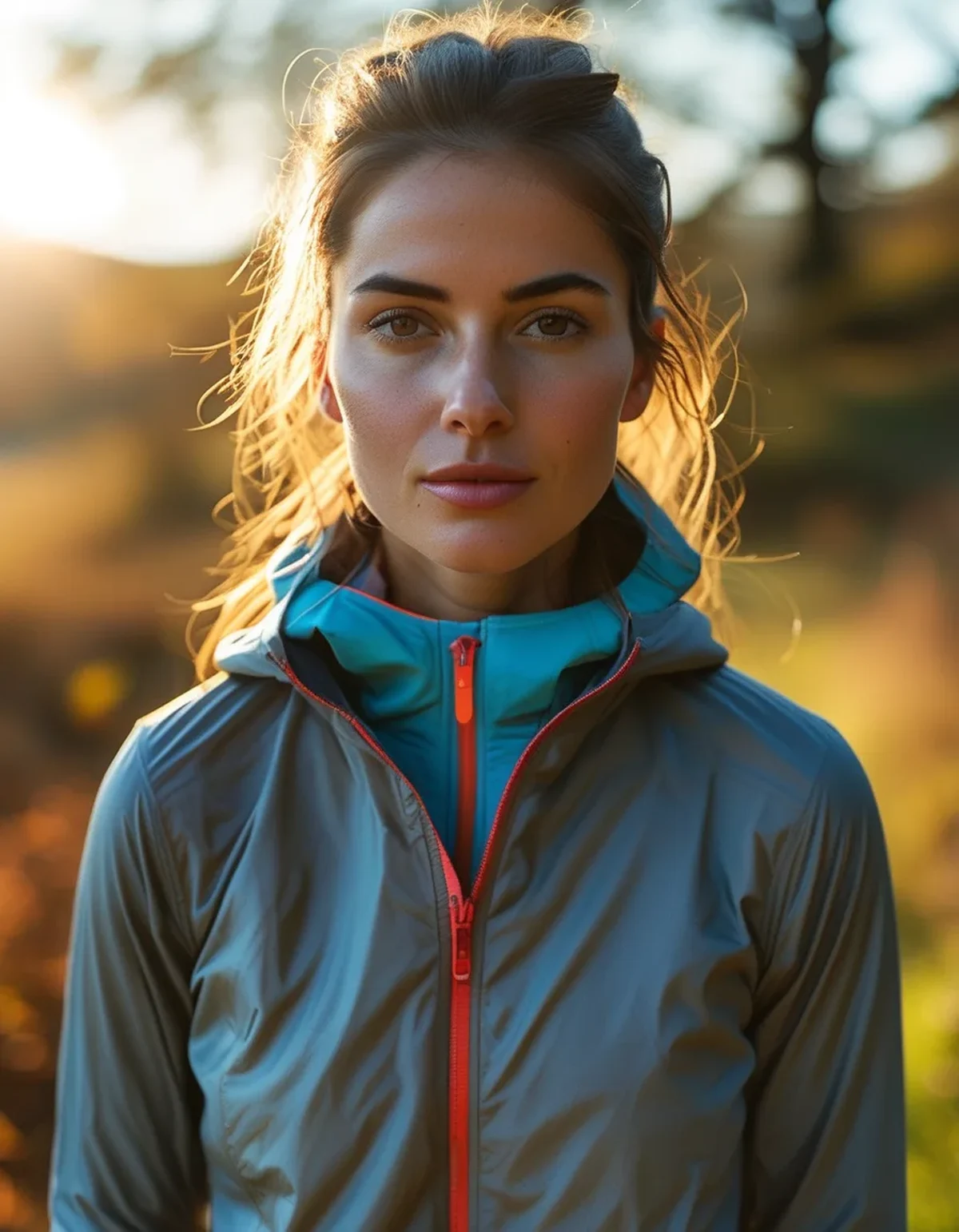
Quick Answer: A running jacket’s job is to block wind and trap a layer of warm air. The base layer’s job is to move sweat away from skin so that trapped air stays warm rather than becoming a wet, cold layer. A cotton base layer under an excellent jacket will leave you colder than a technical base layer under a mediocre one, because wet fabric against skin conducts heat away rapidly. Fix the base layer before spending more on the shell.
You bought the better jacket and you are still cold by mile four.
The jacket was probably never the problem.
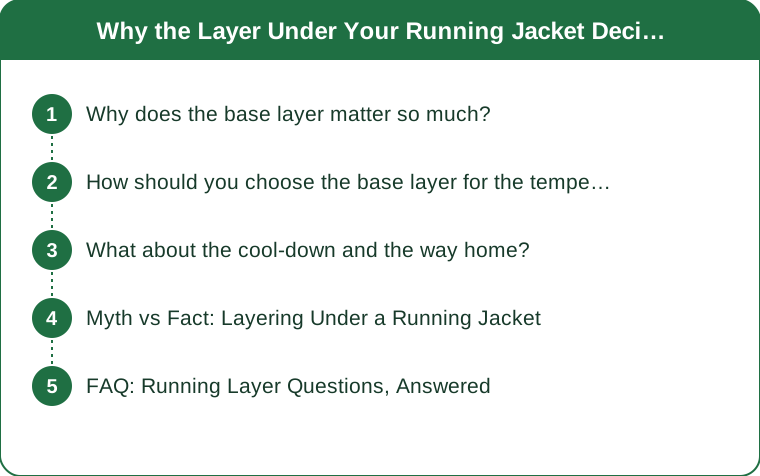
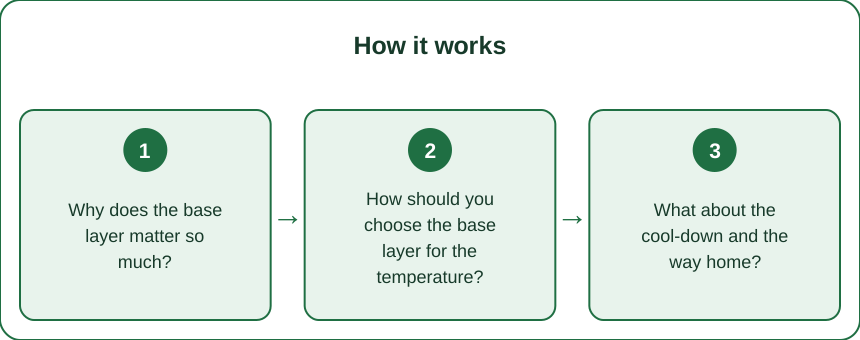
Why does the base layer matter so much?
Wet fabric against skin conducts heat away from the body far faster than dry fabric does, which is the whole reason a damp cotton shirt feels so cold once you slow down.
Running produces sweat even in cold weather, typically within the first ten to fifteen minutes, and a jacket that blocks wind also slows evaporation.
So the jacket creates the conditions that make the base layer’s performance critical. A shell over cotton traps moisture against skin.
Technical base layers move moisture outward by wicking it along fibres to the fabric’s outer surface where it can evaporate or be absorbed by the next layer.
Merino wool retains a useful amount of insulation when damp, which is why it is popular for cold conditions despite drying more slowly than synthetics.
Synthetics dry faster and are generally better for high-output efforts, where sweat volume is the dominant problem.
And fit matters as much as fabric. A wicking layer that is not in contact with skin cannot wick - loose base layers underperform noticeably.
How should you choose the base layer for the temperature?
Above around 55F: a technical short-sleeve tee under a light wind shell, or often no shell at all until you stop.
Around 45 to 55F: a thin long-sleeve technical base layer and a light wind jacket, unzipped for the first mile.
Around 35 to 45F: a midweight base layer - merino or a synthetic grid fleece - under a wind-resistant shell.
Below 35F: a midweight base layer plus a light insulating mid-layer under a shell, with the shell chosen mainly for wind rather than warmth.
Dress for about 10 to 20F warmer than the actual temperature, because you will warm up substantially within the first mile.
Feeling slightly cold at the door is the correct starting state, and it is the rule most people cannot make themselves follow.
And your pace changes the equation more than the thermometer does - the same conditions demand different layers for an easy run and an interval session.
What about the cool-down and the way home?
The return leg of an out-and-back is usually colder, because you are damp, often slower, and frequently running into the wind on the way back.
Sweat that was manageable while working becomes a cooling problem the moment output drops, which is why the last mile and the walk to the door feel disproportionately cold.
A dry layer to change into immediately afterwards does more for post-run comfort than any jacket feature.
Do not stand around in the wet base layer, especially in autumn when the air is cool and you are no longer generating heat.
Plan the route so the exposed windy section happens early while you are dry, not at the end.
And in early autumn specifically, the temperature at the end of a morning run can be very different from the start, which is an argument for a jacket you can carry rather than one you have to wear.
Myth vs Fact: Layering Under a Running Jacket
Myth: a warmer jacket fixes being cold. Fact: if the base layer is holding sweat against your skin, more insulation over the top mostly traps the problem. The layer against skin is where cold runs usually go wrong.
Myth: cotton is fine if it is just a short run. Fact: sweat typically appears within ten to fifteen minutes, and cotton holds it against the skin. On a cool day, a short run in cotton is enough to be genuinely uncomfortable.
Myth: you should feel warm when you set off. Fact: you should feel slightly cold. Body heat production rises sharply in the first mile, and dressing to be comfortable at the door means overheating shortly afterwards.
Myth: merino is always better than synthetic. Fact: merino keeps some insulation when damp and resists odour, but dries slowly. For high-intensity efforts with heavy sweat, synthetics often perform better. Conditions and pace decide.
Myth: a looser base layer breathes better. Fact: wicking requires contact with the skin. A loose base layer leaves sweat on the skin rather than moving it outward, which is exactly the failure mode you are trying to avoid.
Myth: waterproof jackets keep you dry. Fact: they keep rain out and frequently keep sweat in. On a run, a highly breathable wind-resistant shell usually leaves you drier than a fully waterproof one, unless the rain is heavy and sustained.
FAQ: Running Layer Questions, Answered
What should I wear under a running jacket?
A close-fitting technical base layer - synthetic for high-output efforts, merino for cold, longer or slower runs. Never cotton.
How cold should I feel when I leave the house?
Slightly cold. If you are comfortable at the door, you will overheat within a mile.
Why am I cold on the way back but not on the way out?
You are damp, often slower, and frequently facing the wind. Plan exposed sections for early in the route while you are dry.
Merino or synthetic base layer?
Merino retains warmth when damp and resists odour but dries slowly. Synthetic dries fast and suits harder efforts. Many runners keep one of each.
Should my base layer be tight?
Close-fitting, yes. Wicking requires skin contact, so a loose base layer does not move moisture effectively.
Is a waterproof jacket worth it for running?
Only for sustained heavy rain. For most conditions a breathable wind-resistant shell leaves you drier overall because it lets sweat vapour escape.
TL;DR:
- The jacket traps warm air; the base layer decides whether that air stays warm or turns clammy.
- Wet fabric against skin conducts heat away rapidly - never cotton.
- Close-fitting base layers wick; loose ones do not.
- Dress to feel slightly cold at the door, roughly 10 to 20F warmer than the thermometer suggests.
- Merino for cold and slow; synthetic for hard and sweaty.
- The return leg is colder because you are damp and slower - plan exposed sections early.
Fix the layer against your skin before spending more on the shell.
Keep Reading
This article is for general informational and styling purposes only. Fit, sizing, and product availability may vary.