Why the Same Running Jacket Feels Perfect at Mile 1 and Soaked From the Inside by Mile 5
Quick Answer: Every running jacket’s breathability has a practical limit tied to effort intensity and pace — at an easy effort in mile one, sweat vapor escapes about as fast as it’s produced, but as pace or body heat increases, sweat production outpaces the fabric’s ability to vent it, and moisture starts accumulating on the inside well before any rain or external moisture would explain the wetness.
A jacket ‘wetting out’ from inside isn’t a defect — it’s breathability being asked to do more than any fabric at that price point can actually manage at higher effort.

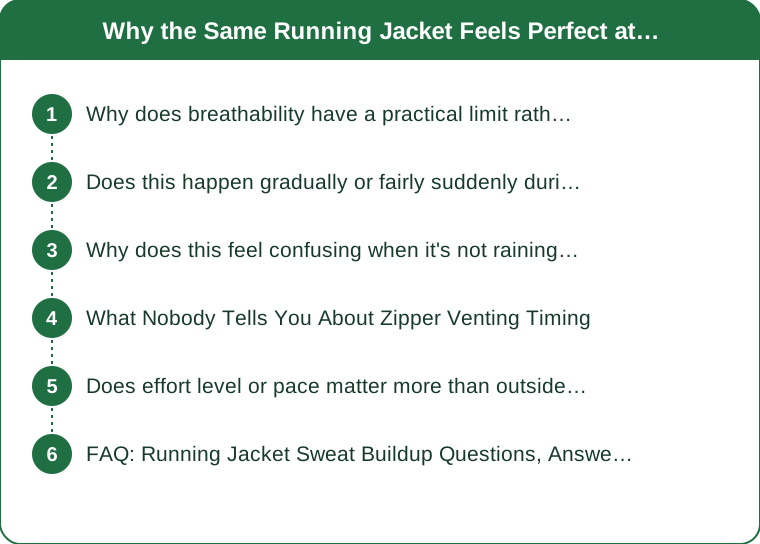
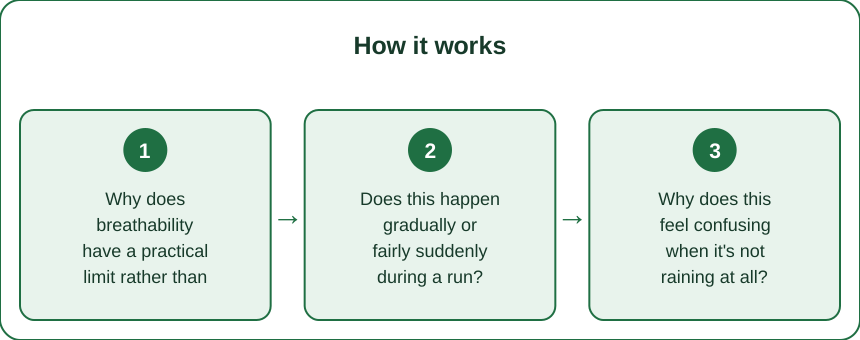
Why does breathability have a practical limit rather than working consistently at any effort level?
Breathable fabric relies on a pressure and vapor-transfer gradient to move moisture from inside to outside, and that process has a maximum rate — at low sweat production (easy effort), the fabric keeps pace comfortably, but as effort and sweat rate increase, they can exceed what the fabric’s structure can vent in real time, causing moisture to accumulate on the inside surface even though the fabric is functioning exactly as designed.
Does this happen gradually or fairly suddenly during a run?
It tends to happen somewhat gradually but becomes noticeable at a fairly specific point — once accumulated inner moisture reaches a threshold where it’s felt as dampness rather than just humidity, which is why many runners describe the jacket feeling ‘suddenly’ soaked around a certain mileage or pace increase, even though the underlying moisture buildup was happening more gradually before that.
Why does this feel confusing when it’s not raining at all?
Because the moisture is originating entirely from the inside (sweat vapor that couldn’t escape fast enough), it can feel identical to external wetness from rain even in completely dry conditions, which is a common source of confusion — checking whether the dampness pattern follows body heat zones (back, underarms) rather than exposed outer surfaces helps distinguish internal sweat buildup from actual rain penetration.
What Nobody Tells You About Zipper Venting Timing
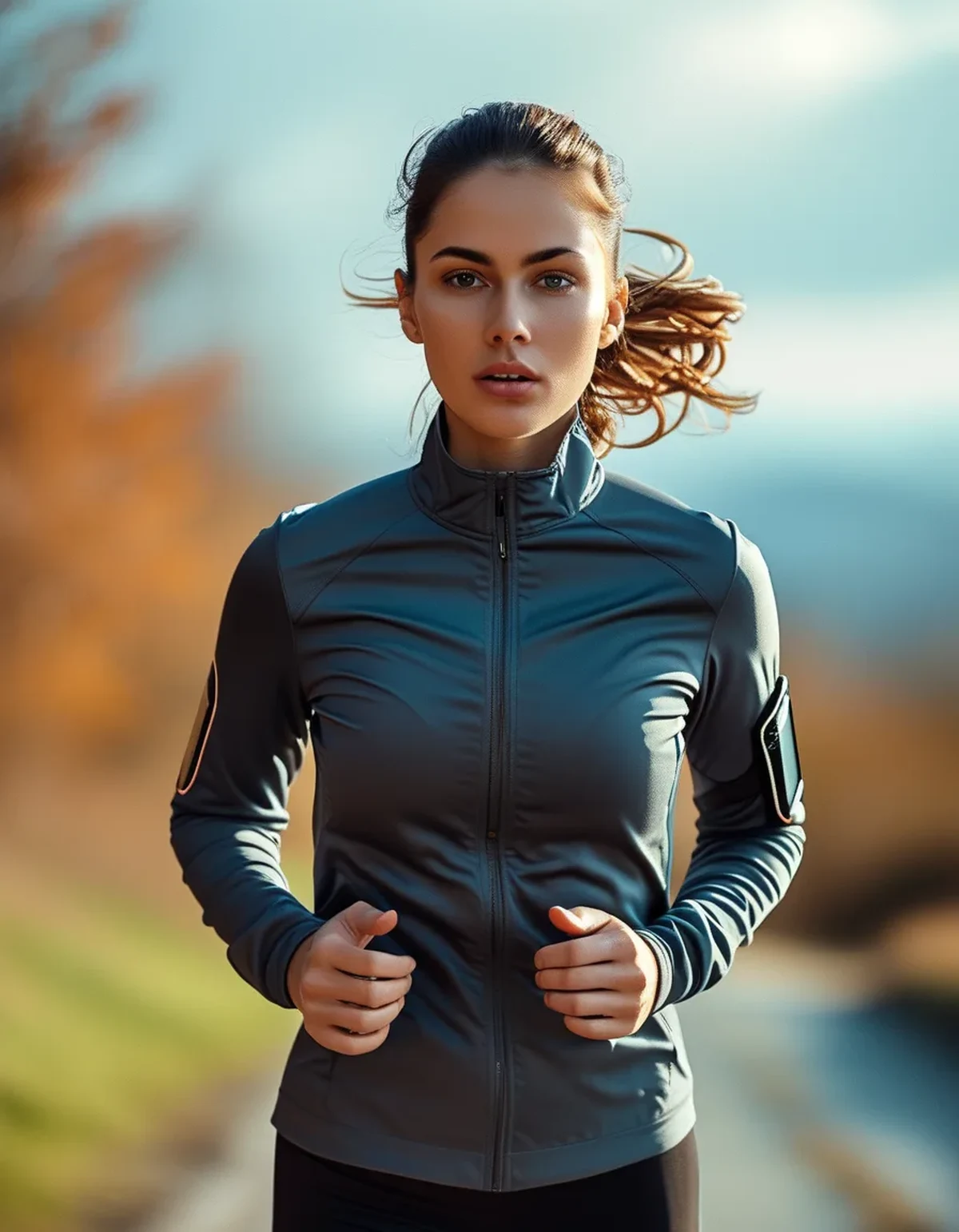
Most runners only reach for a jacket’s zippered vents once they’re already uncomfortably warm and damp, but by that point, meaningful moisture has often already accumulated and takes real time to clear even with vents open. Opening chest or underarm vents proactively — at the first sign of building warmth, well before genuine discomfort — gives the fabric a real head start on managing moisture, rather than trying to catch up after the internal humidity has already built past a comfortable threshold.
Does effort level or pace matter more than outside temperature for this issue?
Often more, yes — a jacket can perform fine on a cold day at an easy pace but wet out quickly on a milder day at a faster pace, since sweat production driven by effort intensity is frequently a bigger factor in exceeding breathability limits than ambient temperature alone, which is why the same jacket can behave inconsistently across different types of runs even in similar weather.
FAQ: Running Jacket Sweat Buildup Questions, Answered
Is a more expensive, higher breathability-rated jacket the main solution?
It helps, since higher breathability ratings genuinely vent moisture faster, but even premium jackets have limits at high sweat rates, so pairing a good jacket with proactive venting habits matters regardless of price point.
Should base layer choice factor into this at all?
Yes — a moisture-wicking base layer that moves sweat away from skin toward the jacket’s inner surface more efficiently can meaningfully reduce the felt dampness, even without changing the jacket itself.
Is unzipping the main zipper more effective than using dedicated vents?
Often yes for higher heat dumping, since it opens a larger airflow path, though dedicated vents are useful for moderate adjustments without fully exposing the torso to wind or rain.
TL;DR:
- Every jacket’s breathability has a practical limit tied to sweat rate, not just fabric quality
- Moisture buildup from sweat can feel identical to external wetness even in dry conditions
- Proactively venting before real discomfort sets in works better than reacting after the fact
- Effort level and pace often matter more than outside temperature for triggering this issue
- A good moisture-wicking base layer meaningfully reduces the felt dampness
The soaked-from-inside feeling is breathability hitting its ceiling, not the jacket failing at its job.
Keep Reading
This article is for general informational and styling purposes only. Fit, sizing, and product availability may vary.