Why Cuffs and Hem Decide More About Warmth Than the Fabric Rating
Quick Answer: Most of the heat a running jacket loses goes out through its openings — cuffs, hem, and neck — not through its fabric. A jacket with a modest fabric rating and well-designed closures will consistently outperform a technically superior fabric with loose cuffs and a straight hem. The openings also control the venting you need when your temperature spikes at mile two.
You bought the warmer-rated jacket and it’s still letting cold air up your back. The fabric is doing exactly what the label promised. The problem is that the fabric was never where most of the heat was going.
Where does a running jacket actually lose heat?
Through the openings, mostly, and by a larger margin than the marketing around fabric technology suggests.
When you run, you generate a pumping effect — each arm swing and stride cycle moves air in and out of the garment. That bellows action drives air exchange through whatever openings exist, and the volume moved is substantial. A loose cuff on a swinging arm is effectively a small pump running continuously.
Fabric matters for the surface area it covers, and windproof membranes genuinely reduce convective loss across that surface. But that surface is doing its job passively while the openings are actively exchanging air with every stride.
The practical version
A thinner jacket with elasticated cuffs, a dropped and adjustable hem, and a high collar frequently feels warmer at 45°F than a thicker one with wide sleeve openings and a straight hem. This isn’t a fabric quality issue — both jackets perform as specified. It’s that one of them is sealed at the points where air actually moves and the other isn’t.
What makes a cuff actually work?
Three things, in order of how much they matter.
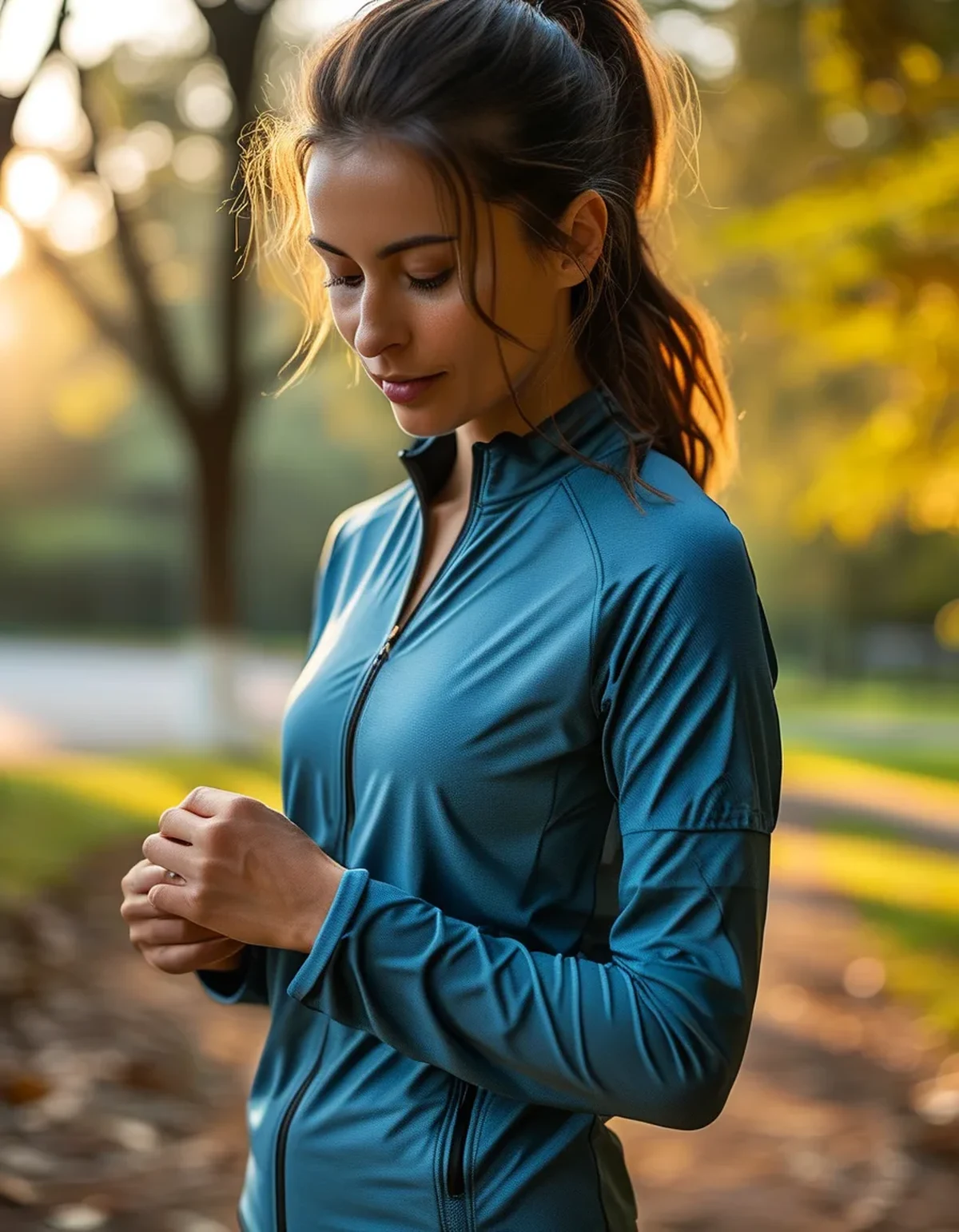
Circumference matching your wrist, not your hand. The cuff needs to close around the narrow part of the wrist. Many jackets size the cuff to slide over the hand easily, which means it sits loose at the wrist — the point where sealing matters.
Some elastic, but not compression. Enough to close the gap, not enough to restrict circulation over an hour. If your hands feel cold and your forearms don’t, the cuff may be too tight rather than too loose.
A thumbhole, if the jacket is for genuinely cold conditions. The thumbhole’s real function isn’t hand warmth — it’s preventing the sleeve from riding up the forearm as you swing your arms, which is the most common way cuffs stop sealing mid-run.
The test before buying
Put the jacket on and swing your arms twenty times as if running. Watch whether the cuff stays at the wrist or migrates up the forearm. A cuff that ends up two inches up your arm at mile one is a cuff that isn’t doing anything for the remaining five miles, however good it looked standing in the store.

Why does hem design matter more than it looks?
The hem controls the largest opening on the garment, and it’s where the bellows effect moves the most air.
A dropped rear hem covers your lower back through the forward lean of running. A straight hem that sits correctly standing up will ride up at the back in motion, exposing exactly the area where a cold draft is most noticeable.
An adjustable drawcord lets you seal the hem in cold conditions and open it when you overheat. This is the single most useful venting mechanism on a jacket, and it’s far more accessible than pit zips while you’re moving.
Elastic at the sides but not the whole circumference is a common design that works well — it holds position without creating a tight band across the stomach.
The overheating side of this
Most running-jacket complaints are about being too hot at mile three, not too cold at mile zero. An openable hem is the fastest way to dump heat while running — releasing the drawcord takes two seconds one-handed and changes the airflow through the whole garment immediately. This is why hem adjustability is worth more than an extra vent panel: you’ll actually use it.
Myth vs Fact: Running Jacket Design
Myth: A higher waterproof rating means a warmer jacket. Fact: Waterproofing and warmth are separate properties. A highly waterproof shell with poor closures can be colder than a light windproof one that seals well.
Myth: Pit zips are the main venting mechanism. Fact: They help, but they’re awkward to operate while running and vent a small area. The hem drawcord and front zip do considerably more of the real-time regulation.
Myth: Looser cuffs are more comfortable for long runs. Fact: They’re more comfortable standing still. In motion they ride up, stop sealing, and let the sleeve bunch at the elbow.
Myth: You should size up a running jacket for layering. Fact: Sizing up usually enlarges the openings proportionally, which undermines the closures. Choosing a jacket cut for layering beats choosing a bigger one.
Myth: The collar height is a style choice. Fact: The neck opening is the third significant air-exchange point, and a collar that closes above the collarbone makes a noticeable difference in wind. It’s a function decision that happens to affect the look.
FAQ: Jacket Closure Questions, Answered
How do I test a jacket properly in a store?
Put it on, adopt a running posture leaning slightly forward, and swing your arms. Check whether the rear hem lifts and whether the cuffs migrate. Standing straight tells you very little.
Are thumbholes worth it in mild weather?
Mostly for sleeve position rather than warmth, so yes, even in mild conditions if you find your sleeves ride up.
My jacket is warm enough but I overheat by mile two. What now?
Start colder than feels comfortable — you’ll warm up within about ten minutes — and use the hem cord and front zip to regulate rather than choosing a lighter jacket.
Does a longer jacket always mean warmer?
Only if the hem seals. A long jacket with a loose straight hem creates a larger chamber for air to move through, which can be worse than a shorter, sealed one.
When should I be shopping for a fall jacket?
Late summer, before the first genuinely cold week — selection is best now, and you want to have tested it on a few cool mornings before you actually need it.
TL;DR:
- Most heat leaves through cuffs, hem, and neck, not through the fabric surface
- Cuffs must seal at the wrist and stay there — test with twenty arm swings before buying
- A dropped rear hem plus an adjustable drawcord handles both warmth and mid-run venting
- The hem cord is the most usable venting control while actually running
- Sizing up for layering enlarges the openings and undermines the whole system
Fabric ratings describe one part of the garment. The openings describe how much of that fabric’s advantage you actually keep, and they’re the part you can evaluate in thirty seconds in a store.
Keep Reading
This article is for general informational and styling purposes only. Fit, sizing, and product availability may vary.