Why a Running Jacket's Visibility Matters More Than Its Color
Quick Answer: Color makes you visible in daylight; retroreflective material makes you visible in headlights; and placement on moving joints — ankles, knees, wrists — makes you recognizable as a person rather than a smudge. Drivers identify runners at several times the distance when reflectivity moves with the body, a phenomenon researchers call biomotion. A neon jacket with no reflective hits is a daytime tool only, and as sunsets slide earlier through late August, the gap between looking bright and being seen starts deciding real outcomes.
Here is what drivers actually see, where reflectivity works, and how to audit the gear you already own.
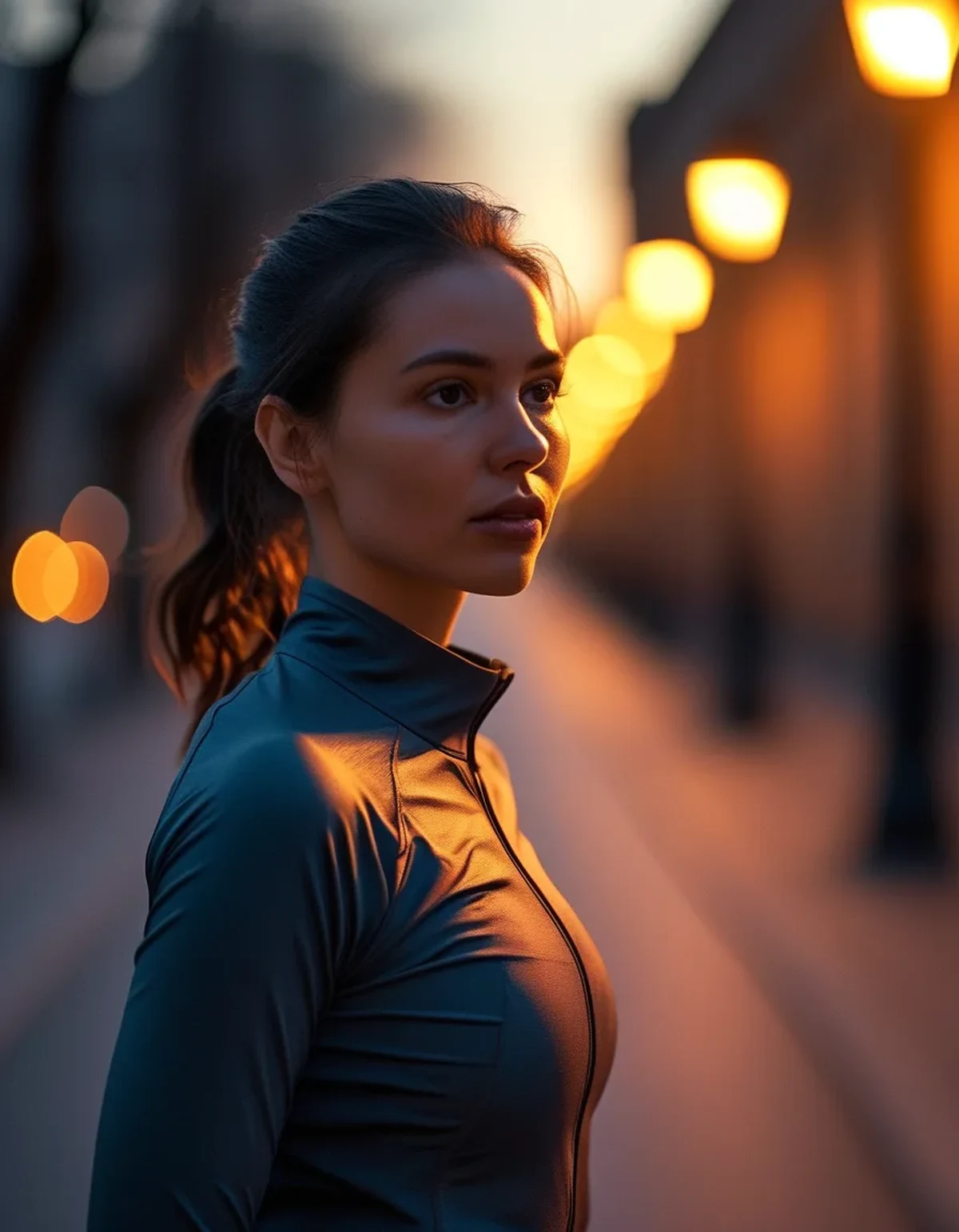
What do drivers actually see at dusk and after dark?
Much less than they think, much later than you assume — and what registers first is motion, not color.
In low light, the eye trades color perception for contrast sensitivity. Fluorescent colors, which work in daylight by converting UV into visible glow, lose their advantage as UV disappears with the sun. By full dark, a neon yellow jacket and a gray one are far closer in visibility than their daytime difference suggests.
What replaces color after dark is headlight physics. Retroreflective material bounces light directly back toward its source — meaning back toward the driver whose headlights hit you. A modest strip of it returns dramatically more light to a driver’s eyes than any fabric color can. This is why a runner in black with good reflective hits is seen sooner than a runner in head-to-toe neon with none.
But the most underrated finding is about placement. Drivers recognize a human fastest when reflective material sits on the moving joints — ankles, knees, wrists, elbows. The rhythmic motion pattern of a runner’s limbs is something the human brain identifies almost instantly, from far away, even in peripheral vision. Researchers call it biomotion, and in detection studies it beats a reflective vest worn on the torso by a wide margin: the vest is a floating rectangle, while moving ankle bands read unmistakably as person running.
Recognition distance is the whole game, because it buys reaction time. The difference between being detected far down the road versus inside a headlight beam is the difference between a driver adjusting early and a driver braking hard.
Where should reflectivity actually sit on your gear?
Prioritized from most to least valuable — audit what you own against this list.
Ankles first. The fastest-moving, lowest, most rhythmically obvious part of a runner. Reflective ankle bands, or tights and leggings with reflective hits at the calf and ankle, do more per square inch than anything else you can wear. This is the one place where your bottoms matter more than your jacket — a pair of running leggings or yoga pants with reflective printing at the lower leg is a genuine safety feature, not decoration.
Wrists and forearms second. Arm swing crosses the body and reads as motion even head-on, which is the angle that matters most at intersections. Jacket cuffs with reflective trim, or cheap slap bands, cover it.
The back and front torso third. A vest or jacket panel adds surface area and helps at long distance, especially from directly behind on straight roads. It is genuinely useful — it is just not sufficient alone, because a static block does not announce human the way moving joints do.
Head and shoulders fourth. A reflective hat brim or shoulder piping helps drivers judge your height and therefore your distance.
Then add one active light: a small clip-on LED, rear-facing red if you run with traffic flow on sidewalks, or a headlamp where footing is dark. Active light works when no headlights are pointed at you — reflectives are useless to a driver whose beams have not reached you yet, and to everyone at unlit trail crossings.
The correct season to fix this is now, not October. Through late August and September, sunset moves earlier by roughly a minute or two per day, and the run that ended in daylight three weeks ago quietly becomes a dusk run at the exact time of year drivers are least mentally adjusted to it.
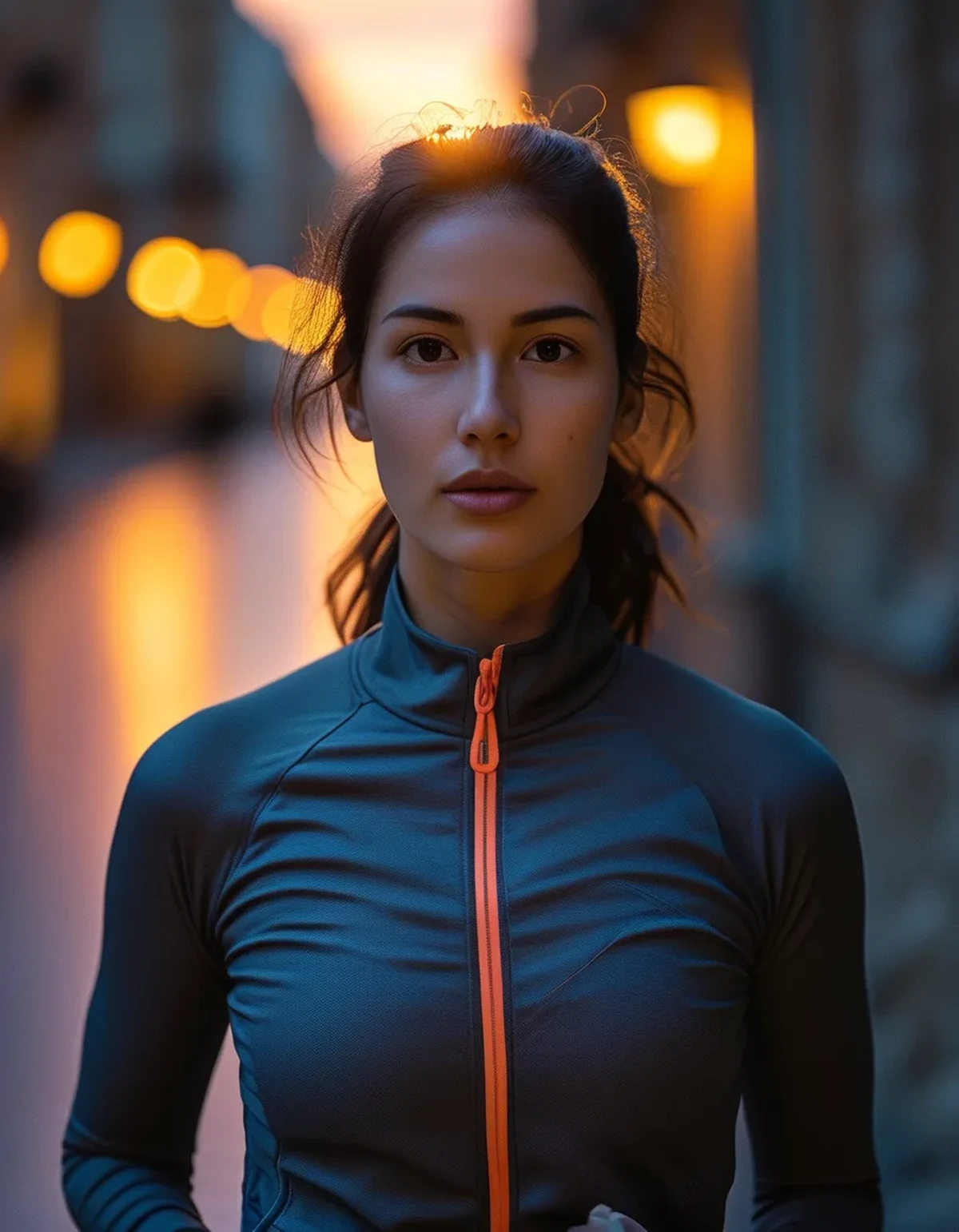
5 Mistakes Everyone Makes With Running Visibility
Trusting the jacket color. The neon jacket earns its keep at dawn, dusk, and in rain — genuine daylight-visibility windows. After dark it is nearly retired, and if it carries no reflective trim, you are running in camouflage that happens to be yellow.
Wearing all the reflectivity on the torso. A vest with nothing at the ankles produces the floating-rectangle problem: visible, but slow to parse as a person, and slowest from the side. Move at least some material to the joints before adding more to the chest.
Assuming streetlights make you visible. Streetlights help you see the ground; they do little for a driver looking through a windshield at a dark shape between light pools. Runners consistently overestimate their own visibility — you can see the car perfectly, so it feels mutual. It is not mutual.
Letting reflectivity wash away. Reflective printing on jackets and leggings degrades with washing and especially with tumble drying. Gear that dazzled two years ago may return a fraction of it now. The phone-flashlight test below takes ten seconds.
Dressing for the start of the run instead of the end. The late-summer trap specifically: leaving at seven in daylight and finishing at eight in dusk, dressed for seven. If any part of the run might touch twilight, carry the visibility for it — a slap band weighs nothing in a pocket.
How do you audit the gear you already own?
Ten minutes, a dark room, and your phone.
The flashlight test. Hang each piece — jacket, leggings, shoes, hat — across the room in the dark. Hold your phone flashlight at your temple, beside your eyes, and look at the garment. That geometry mimics a driver behind headlights, because retroreflection returns light to its source: what glows brightly back at you is what will glow for a driver. What looks like faint gray trim is decorative.
Most people are surprised twice — once by how strongly good gear returns light, and once by how little their older gear does.
Check the angles that matter. Repeat from the side and from behind. Side visibility is the weakest angle on most running wardrobes and the most important one at intersections, where cars cross your path rather than follow it.
Then patch the gaps in cost order. Reflective ankle bands and slap wraps cost a few dollars and address the highest-value zone immediately, whatever you wear over them. A clip-on LED covers the no-headlights scenario. Only after that is a new jacket worth considering — and when it is, judge candidates in the dark-room test, not on the sales floor: you are buying the reflective layout, with the fabric color as a daytime bonus.
Match the setup to the route. Suburban roads with traffic: maximize retroreflective coverage and add the rear light. Unlit paths with no cars: the priority flips to a headlamp so you can see, since there are no headlights to bounce. City sidewalks under bright lighting: color and contrast do more of the work, and the intersection-side angle is your main exposure.
None of this is a substitute for running defensively — facing traffic where appropriate, owning your eyes at every crossing, and assuming the driver has not seen you until their behavior proves otherwise.
FAQ: Running Visibility Questions, Answered
What single purchase improves my visibility most?
Reflective ankle bands. They cost less than a coffee, weigh nothing, attach the strongest recognition signal — biomotion — to the strongest location, and work over any outfit in your closet including the all-black one.
Do I really need a light if my gear is reflective?
For any route with unlit sections, driveways, or trail crossings, yes. Reflectives only function inside a headlight beam pointed at you. A small LED is the only thing working during the gap before beams reach you — and it also makes you visible to cyclists and other runners who carry no headlights at all.
Is white or neon better once the sun is down?
After dark the difference shrinks to nearly nothing — both reflect ambient light passively and weakly. White holds a slight edge under streetlights; neon holds the edge at dawn and dusk while UV is present. Neither substitutes for retroreflective material, which is a different mechanism entirely.
How do I stay visible without overheating in late summer?
Separate the jobs. On warm evenings, skip the jacket and carry visibility as accessories — ankle bands, wrist wraps, a reflective cap, a clip light on the waistband of your leggings. The jacket becomes the cool-weather delivery system for reflectivity, not the requirement.
TL;DR:
- Color works in daylight; retroreflective material works in headlights; they are different mechanisms and only one works after dark.
- Placement beats quantity: reflectivity on ankles and wrists reads as a moving human at several times the distance of a torso-only vest.
- Audit your gear with a phone flashlight held at your temple in a dark room — washed-out reflective trim is common and invisible in daylight.
- Late August is the deadline: sunset arrives one to two minutes earlier daily, and evening runs cross into dusk before habits adjust.
Tonight, run the flashlight test on your usual running outfit. If nothing blazes back at you from the ankles, the fix costs five dollars and beats any jacket in the store.
See It in Motion
Seen here: High Waist Embossed Yoga Leggings with Side Pockets — shop it on bubblelime.com
Keep Reading
This article is for general informational and styling purposes only. Fit, sizing, and product availability may vary.