Why a Running Jacket Rated Fully Waterproof Can Still Leave You Soaked From the Inside
Quick Answer: Waterproof ratings measure how well a fabric blocks external water from entering, but they say nothing about breathability — how well internal moisture vapor from sweat can escape — so a jacket can be genuinely, fully waterproof from outside rain while still leaving a runner damp from trapped sweat that had nowhere to go, especially during higher-effort running.
Waterproof and breathable are two separate properties, and a jacket can excel at one while still leaving something to be desired on the other.
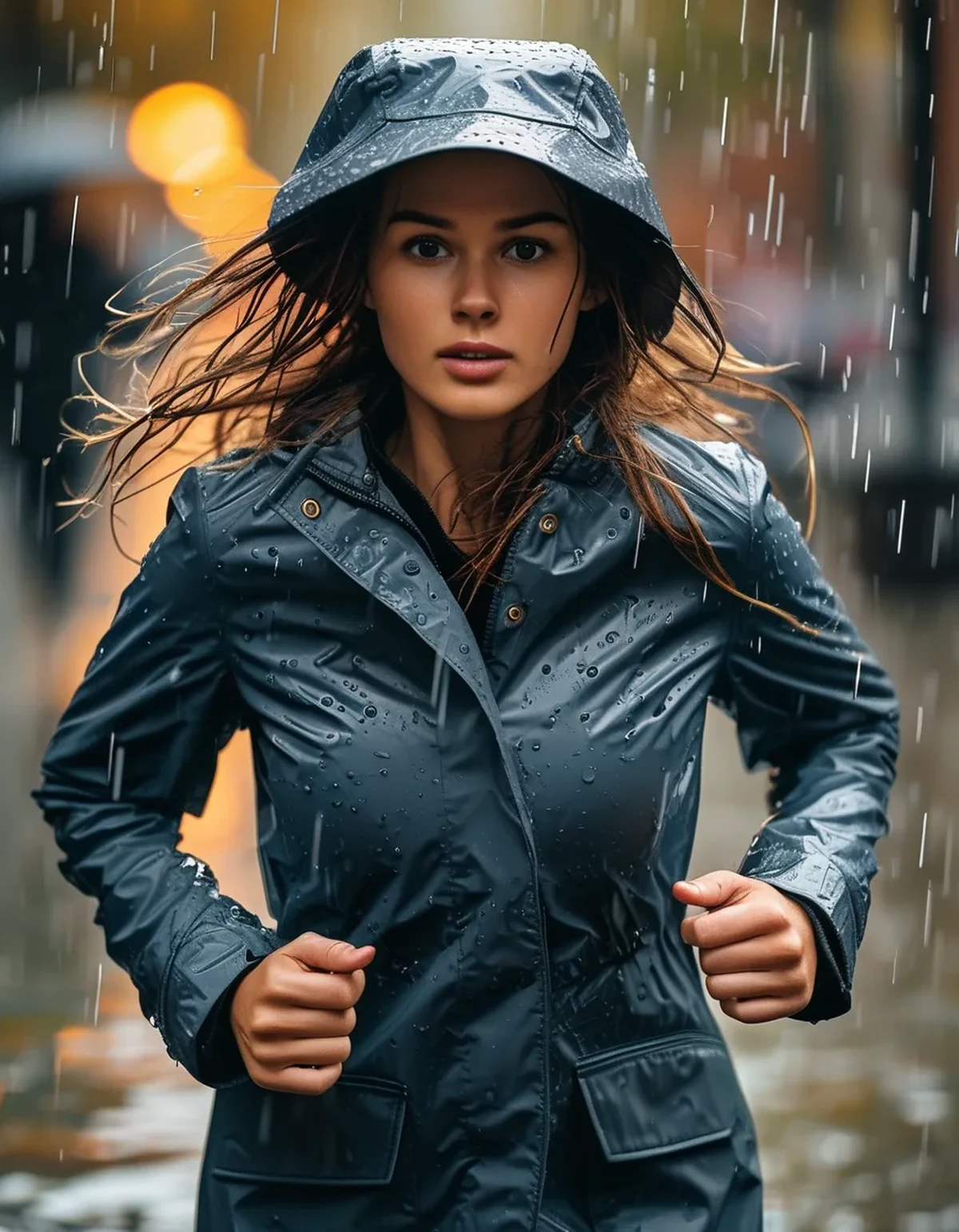
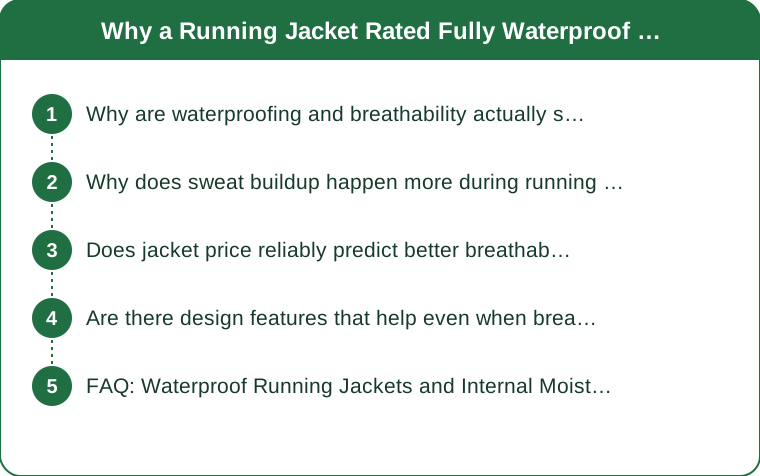
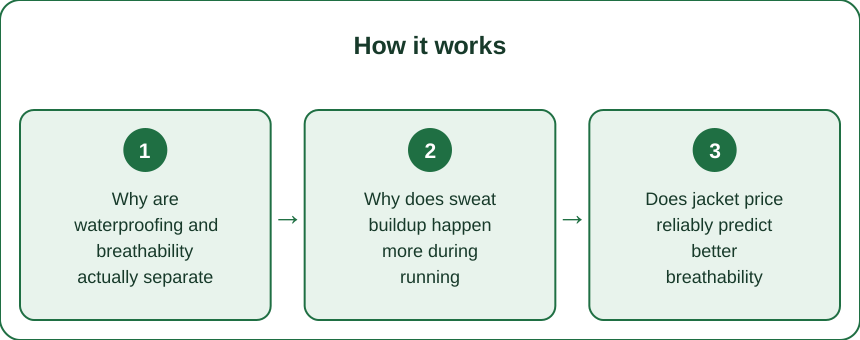
Why are waterproofing and breathability actually separate properties?
Waterproofing depends on the fabric’s outer barrier blocking liquid water from passing through, while breathability depends on how well water vapor — much smaller than liquid droplets — can pass through that same barrier, and a fabric can be engineered to block one while still restricting the other.
Why does sweat buildup happen more during running specifically than walking or standing?
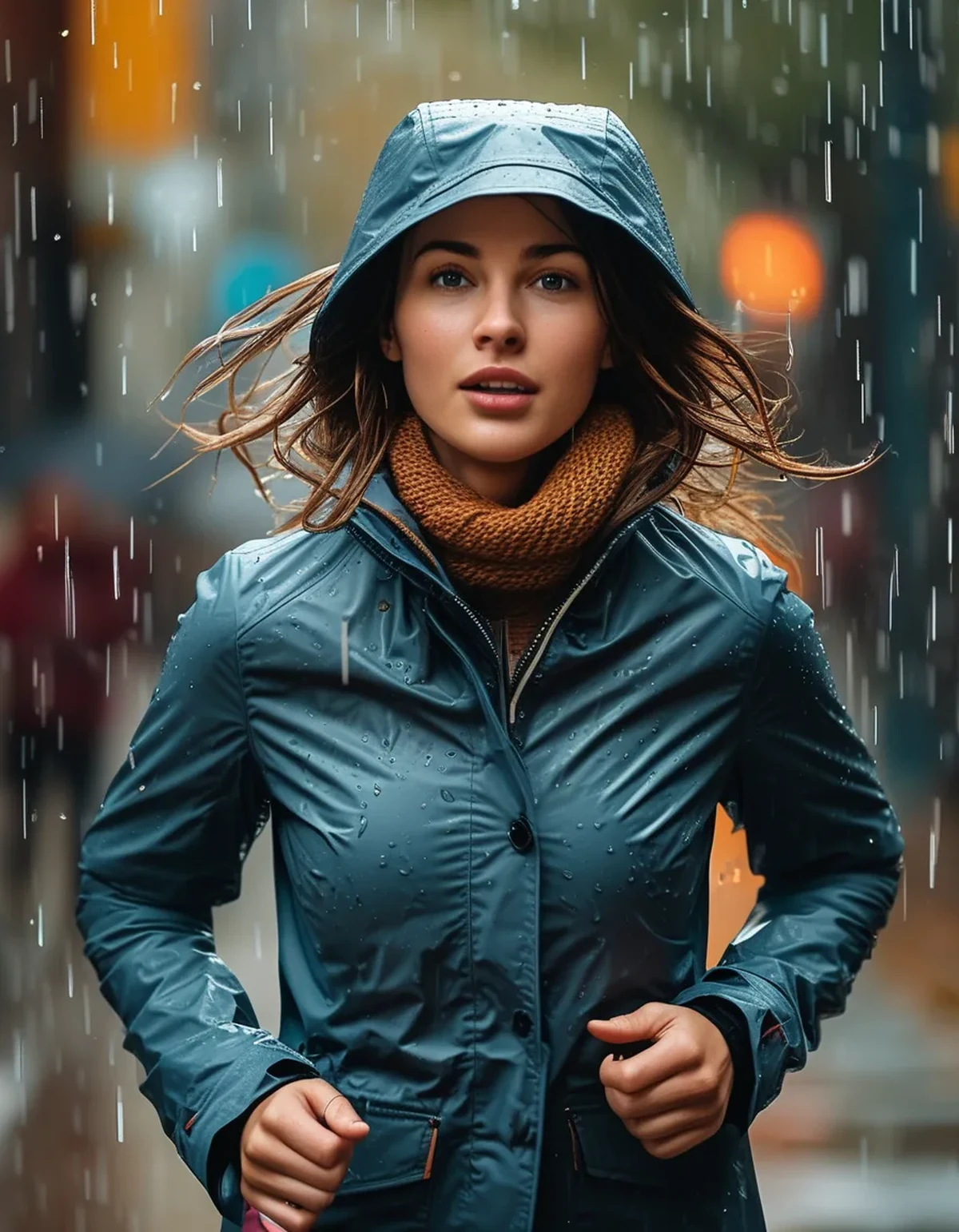
Running significantly increases sweat production compared to lower-intensity activity, generating more internal moisture vapor that needs to escape, which puts more strain on a jacket’s breathability than the same jacket would experience during less intense wear.
Does jacket price reliably predict better breathability alongside waterproofing?
Higher-end waterproof-breathable fabrics generally perform better at managing both properties simultaneously, but checking a jacket’s specific breathability rating, not just its price, is a more direct way to judge this than price assumption alone.
Are there design features that help even when breathability alone isn’t sufficient?
Pit zips, mesh-lined panels, and ventilated back panels provide additional moisture escape routes beyond the fabric’s inherent breathability, helping manage internal moisture even on jackets with moderate breathability ratings.
FAQ: Waterproof Running Jackets and Internal Moisture, Answered
Is there a jacket rating that combines both waterproofing and breathability into one number?
Some technical fabric ratings do combine both properties into a single index, though checking the individual waterproof and breathability figures separately gives a clearer picture.
Does running pace affect how much this internal moisture issue shows up?
Yes — higher-intensity running produces more sweat, making breathability limitations more noticeable than during an easy, lower-effort run in the same jacket.
Would a jacket with venting features but lower waterproof rating be a better trade-off for running?
For many runners, prioritizing breathability and venting features over maximum waterproof rating is a reasonable trade-off, since sweat management often affects comfort more than moderate rain resistance during actual running effort.
TL;DR:
- Waterproof rating and breathability are separate properties, not two sides of the same measurement
- Running produces significantly more sweat vapor than walking, straining breathability more
- Higher-end waterproof-breathable fabrics manage both properties better, which price can hint at but not guarantee
- Venting features like pit zips help manage internal moisture beyond fabric breathability alone
Keep Reading
This article is for general informational and styling purposes only. Fit, sizing, and product availability may vary.