Why a Running Jacket That Blocks Wind Perfectly Also Traps All Your Sweat
A running jacket that completely blocks wind sounds like an obvious win on a cold, gusty morning, but the same tightly woven or coated fabric that stops wind from getting in also has a much harder time letting sweat vapor get out.

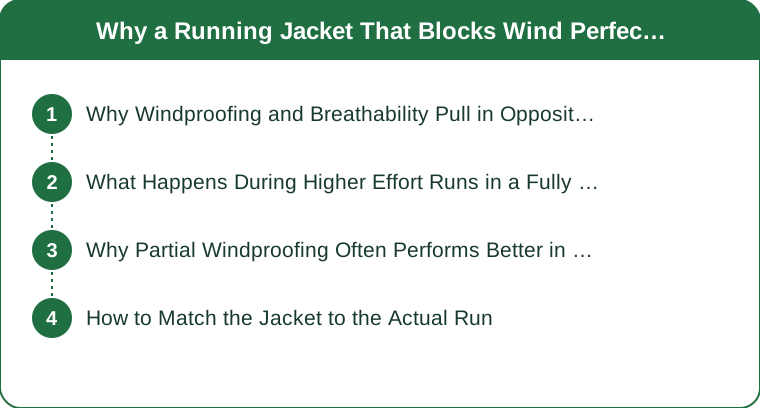
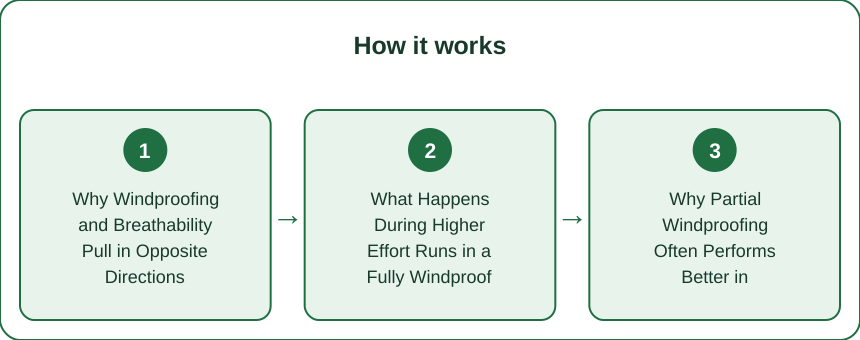
Why Windproofing and Breathability Pull in Opposite Directions
The tradeoff: wind resistance requiring a tightly woven fabric or a membrane coating that physically blocks air from passing through, and that same barrier reducing the fabric’s ability to let water vapor from sweat escape outward.
What Happens During Higher Effort Runs in a Fully Windproof Jacket
The consequence: sweat vapor building up against the skin during sustained higher-effort running, leaving the runner clammy and often colder than expected once they stop moving and that trapped moisture starts to cool against the skin.

Why Partial Windproofing Often Performs Better in Practice
The better middle ground: jackets using windproof paneling only on the chest and front of the arms, where wind hits directly, while using more breathable, less windproof fabric on the back and underarms where airflow needs to escape.
How to Match the Jacket to the Actual Run
The practical guideline: choosing a fully windproof shell for shorter, lower-intensity runs in harsh wind, and a partial-paneling jacket for longer or higher-effort runs where sweat management matters more than blocking every gust, and the frame (windproofing and breathability trade off against each other in the same fabric — matching the jacket’s paneling to the run’s intensity and wind exposure avoids ending up clammy in a jacket that did its one job too well.)
A running jacket that completely blocks wind sounds like an obvious win on a cold, gusty morning, but wind resistance requires a tightly woven fabric or membrane coating that physically blocks air from passing through, and that same barrier reduces the fabric’s ability to let water vapor from sweat escape outward. Sweat vapor builds up against the skin during sustained higher-effort running in a fully windproof jacket, leaving the runner clammy and often colder than expected once they stop moving and that trapped moisture starts to cool, which is why jackets using windproof paneling only on the chest and front of the arms, while leaving more breathable fabric on the back and underarms, often perform better in practice than a fully sealed shell. Choosing a fully windproof jacket for shorter, lower-intensity runs in harsh wind, and a partial-paneling jacket for longer or higher-effort runs, matches the tradeoff to what the run actually needs instead of blocking every gust at the cost of trapping every drop of sweat.
Keep Reading
This article is for general informational and styling purposes only. Fit, sizing, and product availability may vary.