Why Pocket Placement Matters More Than Pocket Count on a Running Jacket
Quick Answer: The most functional running jacket pockets sit low on the back or angled at the hip, close to the body’s center of mass, since pockets placed higher on the chest or loosely at the front tend to bounce with each stride and are harder to access without breaking form.
More pockets doesn’t mean more useful storage if half of them are in places that make a phone bounce against your chest for six miles.
Why does pocket location affect running comfort so much?
Pockets placed away from the body’s center of mass amplify motion with every stride, since anything stored there swings and bounces more noticeably than something closer to the hips or lower back.
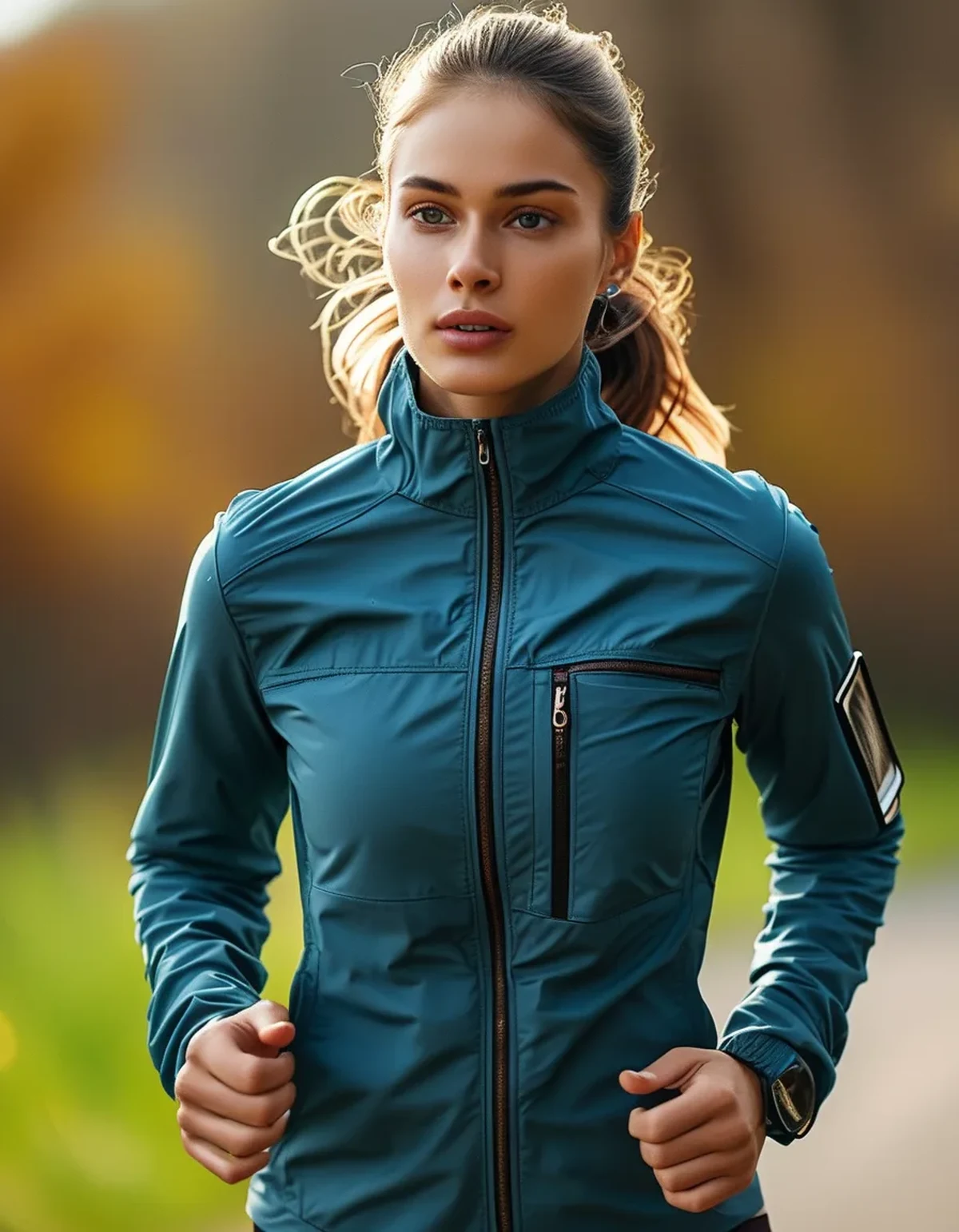
Chest or upper-front pockets are the most common offenders, since that area moves the most during arm swing and breathing compared to the more stable hip and lower back region.
What’s actually the best pocket placement for running specifically?
Low back pockets, sometimes called kangaroo-style, and angled hip pockets tend to be the most stable locations, since they sit closer to the body’s natural center of gravity and move less during the running stride.
Side-seam pockets positioned at the hip are also generally more accessible mid-run than front pockets, since reaching them doesn’t require breaking arm swing rhythm.

Myth vs Fact: Running Jacket Pockets
Myth: more pockets always means more useful storage. Fact: pockets placed in high-bounce zones often go unused during actual runs, regardless of how many total pockets a jacket has.
Myth: zippered pockets are always more secure than open ones. Fact: zipper security matters less than placement — a poorly placed zippered pocket can still bounce uncomfortably even with items secured inside.
How should pocket placement change based on what’s being carried?
A phone, being both heavier and more sensitive to impact, benefits most from the most stable pocket location available, typically low back or hip.
Lighter items like keys or gel packets are more forgiving of placement, making front pockets more reasonable for those specifically, even if not ideal for a phone.
FAQ: Running Jacket Pocket Placement Questions, Answered
Do zippered chest pockets ever make sense for running?
They can for very light, flat items like a card or key, but heavier items still bounce uncomfortably in that location regardless of zipper security.
Is a low back pocket harder to access than a front pocket?
Slightly, but most runners find the stability trade-off worth the small reach adjustment, especially on longer runs.
Should pocket placement be a top priority when choosing a running jacket?
For anyone who regularly runs with a phone or other gear, yes — it directly affects comfort in a way that’s easy to overlook while trying a jacket on standing still.
TL;DR:
- Pockets far from the body’s center of mass bounce more during running
- Low back and hip pockets are generally the most stable placement
- Chest and front pockets work better for very light items, not phones
- Try on a jacket and jog in place before buying to actually test pocket bounce
Check where the pockets sit, not just how many there are — placement is what determines whether they’re actually useful mid-run.
Keep Reading
This article is for general informational and styling purposes only. Fit, sizing, and product availability may vary.