The Packable Running Jacket: The Just-in-Case Layer That Lives in Your Pocket
The packable jacket is running insurance — the hundred-gram layer that lives stuffed in a pocket until the weather turns — and the category rewards knowing the trades: weight versus weather-proofing versus price. The packable guide: the category, the carry decisions and the trades.

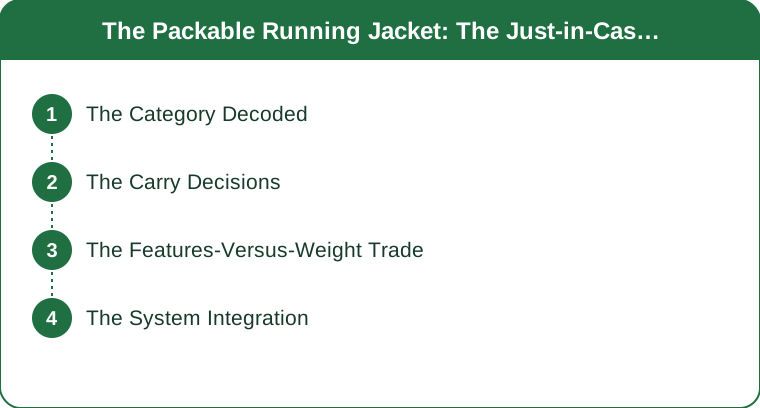
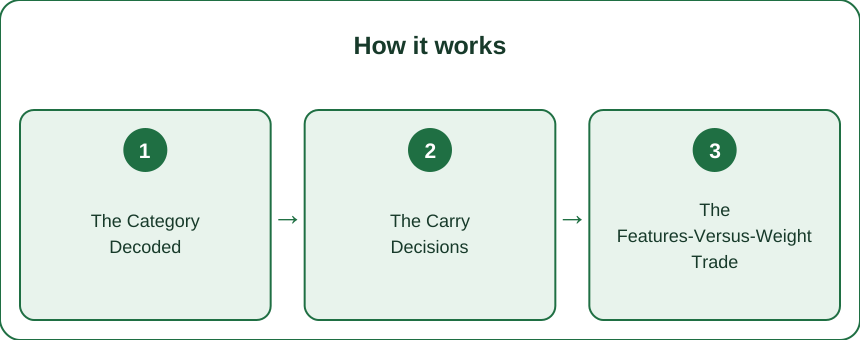
The Category Decoded
What packable means: the weight classes (the sub-100-gram wisps to the 200-gram all-rounders — the packed size from fist to grapefruit; the weight-weather trade being the category’s axis), the wind-versus-rain distinction (the windshells being the packable core — the wind protection at featherweight; the waterproof-packables costing weight, money and breathability per the rain doctrine; the shower-resistant middle being most runners’ sweet spot), the breathability reality (the more weatherproof, the less breathable — the packable worn RUNNING needing venting; the boil-in-the-bag budget waterproofs named honestly), the stuff-pocket feature (the jacket packing into its own pocket with a clip loop — the handheld-or-belt carry; the packability being pointless if it’s a wrestling match), and the honest use-case (the packable being for CHANGEABLE conditions and just-in-case — the committed all-rain run wanting the real shell from the rain doctrine; the categories serving different days).
The Carry Decisions
When it earns pocket space: the changeable-forecast days (the 40-percent-rain and gusty-front days — the insurance math: the hundred grams against the soaked-and-cold hour), the long-run standard (the hour-plus outings where weather can turn — the vest-or-belt stowage from the vest doctrine; the mountain-and-trail runs making it non-negotiable per the trail doctrine), the shoulder seasons (the spring-and-fall volatility being packable prime time — the start-cold-finish-warm days where it begins ON and ends pocketed per the layering doctrine), the race-day role (the start-line warmth that stuffs away at the gun — the throwaway-alternative that isn’t thrown away; the finish-line insurance in the drop bag), the windchill-turnaround case (the out-and-back with wind home — the jacket donned at the turn per the wind doctrine), and the skip-days honesty (the stable warm forecasts leaving it home — the just-in-case that becomes always-carried dead weight; the decision made per run, not per default).

The Features-Versus-Weight Trade
Choosing your spec: the minimal wisp (the sub-100-gram windshell — the near-invisible carry; the trades: no hood, minimal pockets, delicate fabric; the racer-and-fastpacker choice), the all-rounder middle (the 130-180-gram tier — the hood, the zip pockets, the sturdier face fabric; the most-runners answer; the DWR shower-resistance standard), the storm-ready packable (the 200-plus-gram waterproof-breathables — the taped seams and real hoods; the mountain-safety tier from the trail doctrine; the weight accepted for the exposure), the fit notes (the trim-but-layerable cut — the flap-in-wind excess fabric being the packable’s failure mode per the fit doctrine; the hood that cinches or stays home), the durability honesty (the featherweight fabrics being delicate — the pack-strap abrasion and bramble tears; the careful-use contract), the visibility layer (the bright-and-reflective options doubling as safety kit from the visibility doctrine), and the budget guide (the 60-120 sweet spot — the premium wisps for the gram-counters; the one good packable outlasting three cheap ones per the buy-once doctrine).
The System Integration
The packable in the kit: the carry infrastructure (the vest pocket, the belt, the shorts’ back zip — the stowage matched per the vest doctrine; the roll-and-clip habit), the layering role (the packable OVER the base as the complete cool-day kit — the third layer in the winter system from the winter doctrine; the year-round utility), the care specifics (the technical wash and the DWR refresh from the care doctrine — the stuffed-wet jacket dried before storage; the delicate cycle contract), the travel bonus (the packable as the trip’s all-purpose layer from the travel doctrine — the plane, the evening and the run in one hundred grams), the replacement signals (the wetting-through, the zip failure, the seam lift — the honest retirement per the replacement doctrine), and the closing frame (the packable as the run-anyway enabler — the forecast that would have canceled now merely noted; the weather insurance that weighs less than a phone; the sky, called with confidence). Windshell for most, stuff-pocket non-negotiable, carried on the changeable days: the insurance, pocketed.
The packable’s axis is weight versus weatherproofing: sub-100g windshells for insurance, 130-180g DWR all-rounders for most, real waterproofs only for mountain exposure. Carry on changeable forecasts, hour-plus runs and windy out-and-backs — and leave it home on stable days.
Keep Reading
This article is for general informational and styling purposes only. Fit, sizing, and product availability may vary.